Global Banking Fraud Detection & Risk Analysis
End-to-end Data Analytics Project using Excel → SQL → Power BI
Garv Dudy | Data Analyst Project | Winter 2025
Executive Summary
This project analyzes over 153,000 banking transactions to uncover fraud patterns, transaction behavior, and financial risk exposure using a scalable analytics pipeline. The objective is to support proactive fraud monitoring rather than reactive controls.
Total Transactions
153,000+Confirmed Fraud Cases
~2,000Total Fraud Amount
$18.65MFraud Rate
~1.29%Data Cleaning & Preparation (Excel)
Raw transactional data was cleaned and standardized in Excel to ensure analytical accuracy before loading into SQL.
- Removed useless columns, empty rows, and duplicates
- Trimmed whitespace and standardized text formatting
- Split customer names into first and last names
- Cleaned date and transaction amount formats
- Created amount buckets and refund tracking columns
- Standardized merchant, category, transaction type, and country names
- Prepared dataset for SQL querying and Power BI modeling
SQL Analysis Layer
SQL acted as the analytical engine, transforming cleaned data into structured KPIs and fraud insights before visualization.
- Transaction volume and monetary flow analysis
- Fraud count, fraud rate, and average risk score calculation
- Country-wise and merchant-wise exposure analysis
- Refund and reversal behavior assessment
- Merchant category fraud rate comparison
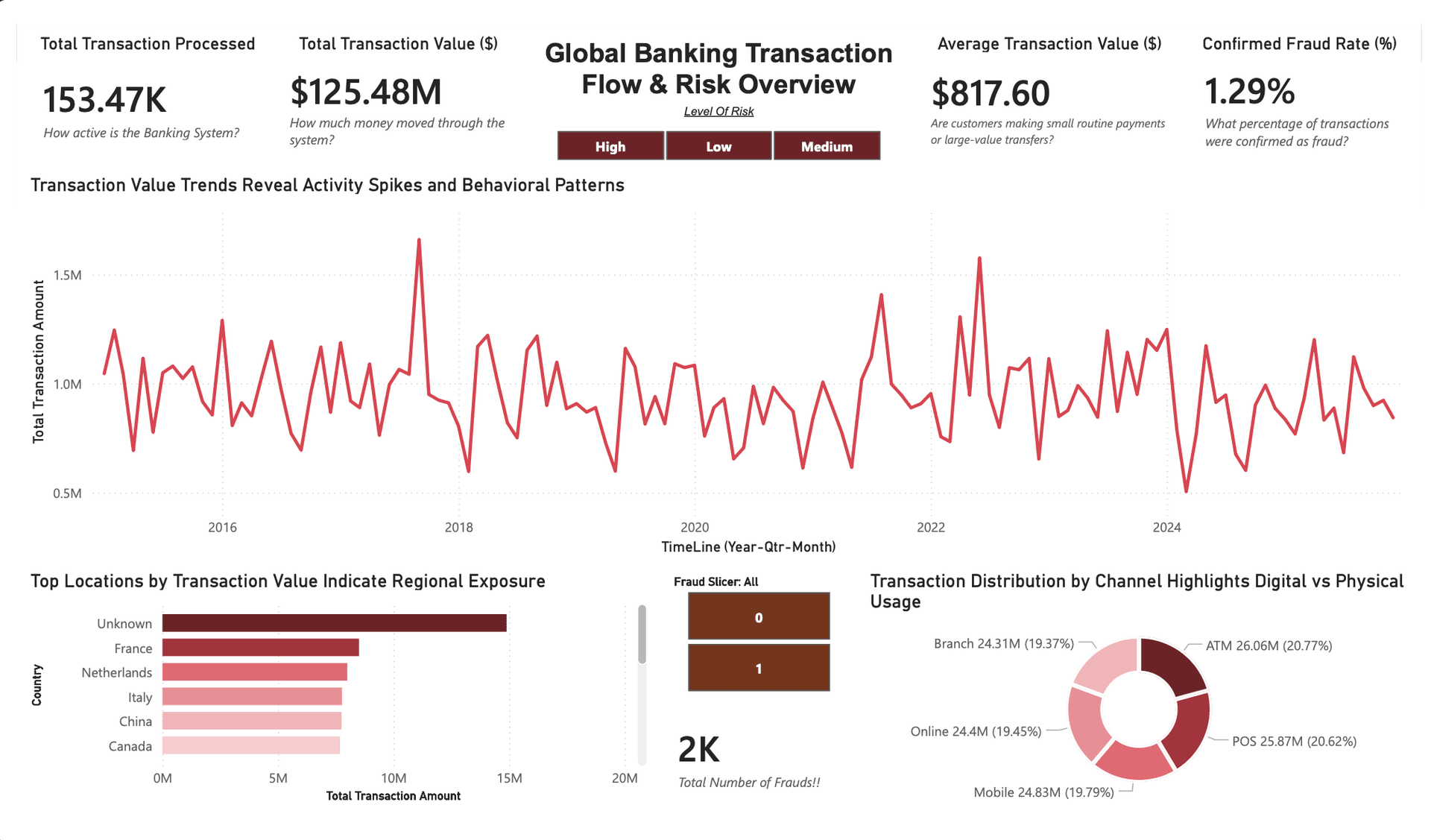
Power BI Dashboards & Visualization
SQL outputs were connected live to Power BI to build interactive dashboards for executives, risk teams, and analysts.
- Global transaction flow and geographic exposure
- Digital vs physical transaction behavior
- Merchant category and transaction type fraud risk
- Refund behavior and fraud concentration analysis

Conclusion & Business Impact
This project demonstrates how an end-to-end analytics pipeline can convert large-scale banking data into actionable fraud intelligence. The framework mirrors real-world banking environments and supports predictive, behavior-based risk monitoring.